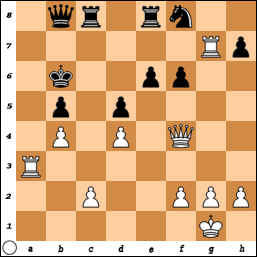
Hee, een klassieke stelling. De zwartspeler rekende dit tot één van zijn beste partijen.
Samen met zijn partij tegen Réti uit Baden Baden1925
Beide toernooien kenden echter geen schoonheidsprijs. Het vervolg na Fred's zet is fraai.
“People who want to improve should take their defeats as lessons, and endeavor to learn what to avoid in the future. You must also have the courage of your convictions. If you think your move is good, make it.”
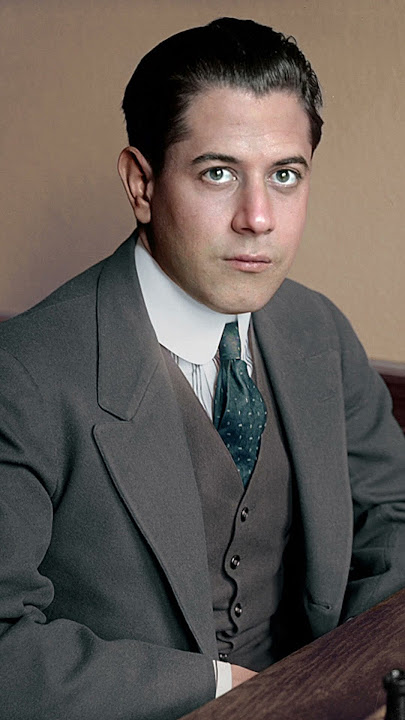
De vierde wereldkampioen schrijft dat zelf in zijn verzamelde partijen. Kasparov herhaalt het op blz 379 van My Great Predecessors deel 1.
“People who want to improve should take their defeats as lessons, and endeavor to learn what to avoid in the future. You must also have the courage of your convictions. If you think your move is good, make it.”
Hier de partij met commentaar van GM Neil McDonald (Hopelijk vindt Hendrik het goed dat ik oplossing en partij plaats)
“People who want to improve should take their defeats as lessons, and endeavor to learn what to avoid in the future. You must also have the courage of your convictions. If you think your move is good, make it.”
1.Dd6+ na Dxd6 volgt 2.Tga7 met mat. Op 1...Tc6 komt 2.Dxb8+ Txb8 3.Tga7 en de zwarte koning kan niet naar c6 om zo veld b6 voor de toren van b8 vrij te maken.
“People who want to improve should take their defeats as lessons, and endeavor to learn what to avoid in the future. You must also have the courage of your convictions. If you think your move is good, make it.”
Ahh ja Bouwmeester schreef het in dezelfde bewoording, en daar was ik in aan het lezen, vandaar de associatie. Interessant om de partij te zien met uitgebreid commentaar, in het boek wordt het alleen als combinatiemotief besproken. Het spel van wit wordt dan ook iets verklaarbaarder, maar het blijft een benauwende positie.